
School of Agriculture
WIU Home > CBT > Agriculture > Farms > Altcrops
WIU Alternative Crops Research Program • Directed by Winthrop B. Phippen, PhD
Mission
The Alternative Crops Research Program at Western Illinois University was established in August 2000 to investigate new crops for the Midwest and help revitalize the local economies. The goal of the program is to provide alternative crops that can fit into the corn and soybean rotations already in place to assist with pest problems and to increase crop diversity. Initial studies will evaluate the available germplasm for desired characteristics and develop production guidelines for the Midwest region. Long-term studies will focus on improving yields and adapting crops to the current corn and soybean rotations.
Contact
Winthrop Phippen, Professor • Office: Knoblauch Hall 310 • Phone: (309) 298-1251 • Email: WB-Phippen@wiu.edu
Research Crops
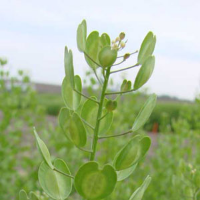
Pennycress - Thlaspi arvense
Researchers in Illinois at Western Illinois University and the USDA-National Center for Agricultural Utilization Research (NCAUR) in Peoria, have identified the potential new crop, field pennycress (Thlaspi arvense), that can grow slowly over the winter and spring months with harvest in late May to early June. With pennycress's early harvest date, a full season soybean can be grown on the same acreage immediately following harvest. Learn more about the Pennycress Resource Network.
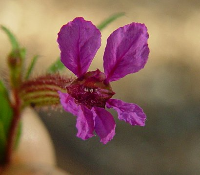
Cuphea - New Oilseed Crop for Western Illinois
One goal of the Alternative Crops Research Program at Western Illinois University is to commercialize Cuphea production in the McDonough County area of Illinois. WIU researchers are collaborating with investigators from Oregon State University, USDA-ARS, and the University of Georgia to adapt Cuphea’s unique traits for agronomic cultivation. The first field trials occurred at WIU in the summer of 2001 with continuing experiments to evaluate stand establishment, weed control, planting date, and inter-specific hybridization.
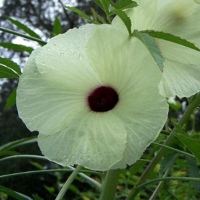
Kenaf - Potential New Fiber Crop
Kenaf (Hibiscus cannabinus L.) is an annual fiber crop related to cotton and okra that researchers at Western Illinois University are evaluating as a cropping alternative for the region. Initial research found kenaf grew rapidly, but the plants were unable to produce seed in this area of Illinois. Research into kenaf's feasiblity is ongoing.
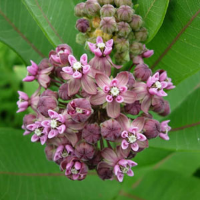
Milkweed - New Cash Crop for Local Farmers
Common milkweed (Asclepias syriaca) is a perennial crop traditionally considered a nuisance weed by farmers throughout the Midwest. However, the Alternative Crops Research Program at Western Illinois University is currently seeking to add milkweed to the list of agronomic crops grown in the western counties of Illinois. The production of milkweed for floss and seed could provide local farmers with a new crop option that provides annual returns with minimal maintenance.
Niger - High Value Birdseed for the Midwest
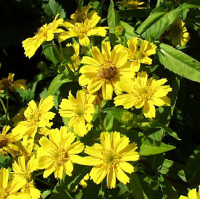
Niger (Guizotia abyssinica) is a new crop alternative with potential for cultivation in the Midwest. Investigators with the Alternative Crops Research Program at Western Illinois University are studying niger as a possible new addition to the current cropping regime in the western part of Illinois. Niger is most known in the United States as a high dollar birdseed for use in finch and other feeders.
Okra - Alternative for Farmers with Severe SCN
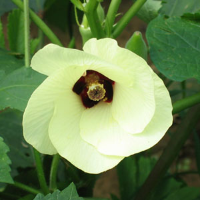
Okra (Abelmoschus esculentus) is best known as a vegetable crop in the southern region of the United States. However, current research shows okra's potential as an alternative to soybeans in areas where the soybean cyst nematode (SCN) severely reduces yields. The market for okra could be similar to soybeans, and okra could be grown using the same planting and harvesting equipment.
Alternative Crops Demonstration Plots
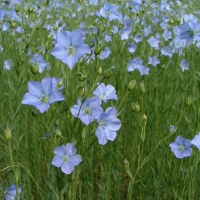
In addition to the primary research crops of Cuphea, niger, okra, kenaf and milkweed, WIU is also evaluating other potential new crops for the state of Illinois. Plants grown in the 2004 demonstration plots were: black-eyed peas, canola, crambe, flax, pearl millet, rapeseed, NuSun sunflowers, sesame, and sunn hemp. All plants were direct seeded in mid - late May.
Alternative Crop Resources
Crop Information
- Natural Resources Conservation Service Plants Database (NRCS)
- NewCROP HomePage from Purdue University
- National Plant Germplasm System- GRIN Search
- Alternative Crop Suitability Maps (Guide to over 900 crop plants)
Professional Associations
- The Association for the Advancement of Industrial Crops (AAIC)
- The American Society for Horticultural Science (ASHS)
- The American Society of Agronomy
- The American Society of Plant Biologists
Connect with CBT: