Meteorology is the study of the physical characteristics of the lower atmosphere and the processes that are responsible for generating the weather. Students who complete the major are exposed to concepts, methodologies, and practical applications related to both weather analysis and forecasting.
The structure of the degree is based upon National Weather Service requirements for employment as a meteorologist (GS-1340) and includes courses in analysis and prediction of weather systems (synoptic meteorology), atmospheric dynamics and thermodynamics, physical meteorology, remote sensing, physics, and mathematics through calculus and differential equations. Through this structure, students learn how to forecast weather and use specialized equipment including instruments and reporting techniques associated with weather observations, weather radar, and remotely-sensed (e.g., satellite) information.
The objectives of the bachelor's degree in meteorology include in-depth study of meteorology to serve as the culmination of a science education, preparation for graduate education, and/or preparation for professional employment in meteorology. All the non-introductory meteorology courses have relatively small class sizes (typically 15-25 students). Such relatively low student-teacher ratios allow for a great deal of interaction with the instructors, all of whom hold Ph.D.s.
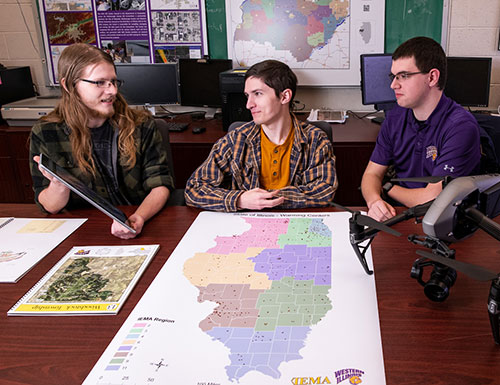
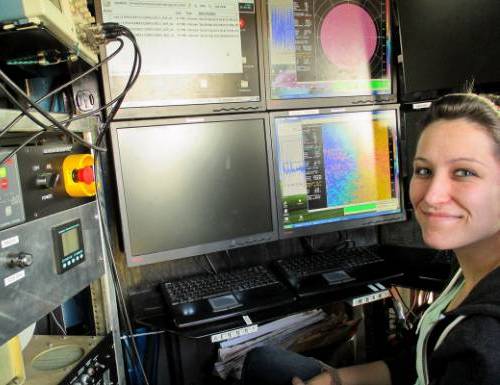
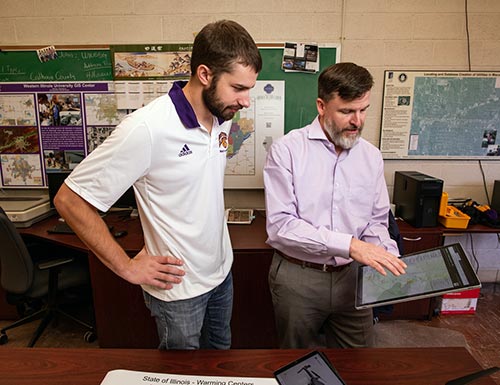
The department has several instruments and facilities to enhance the student experience including a weather station, weather radar, a meteorology/climatology computer laboratory, and a Geographical Information Systems (GIS) laboratory.
The structure of the Meteorology degree meets the requirements for certification as a meteorologist by the National Weather Service.
The requirements for the B.S. in Meteorology are as follows: