History is . . .
the memory of humankind. As the cornerstone of a liberal arts education, its study contributes to an understanding of self and society grounded in an appreciation of cultures and traditions that have shaped the present. As an academic discipline, its mastery imparts critical awareness and abilities as well as a recognition of the essential value gained from pursuing greater knowledge.
Historians analyze the development, functioning, and interactions of myriad societies in the past. Thus, historical study takes many forms. Among the most common thematic approaches to historical analysis are social history, cultural/intellectual history, military history, diplomatic history, political history, economic history, and environmental history. While the faculty members of WIU's History Department have individual fields of research and teaching specialization, we all incorporate many diverse approaches into our teaching. Our Department offers specialists and courses relating to many kinds of historical analysis, across a wide range of chronological and geographical emphases.
.jpg)
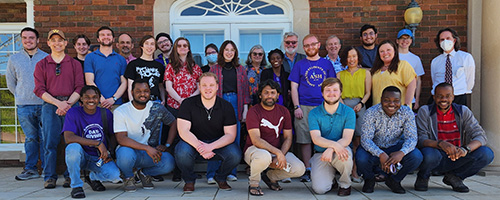
History faculty members gather at WIU's Annual History Conference
Thematic Approaches to History
Social historians study history "from the bottom up." Among the areas of social history that WIU's historians specialize in are women's history, African-American history, Native American history, labor history, the history of marriage and the family, and the history of sexuality. Western's historians of women include Dr. Boynton (U.S.), Dr. Chamberlin (Germany), and Dr. Pamonag (Japan). WIU's African American historian is Dr. Key, and our Native American historian is Dr. Jelatis. Western's labor historians include Dr. Cole (U.S. and South Africa) and Dr. Hall (U.S). Our historian of marriage and the family is Dr. McNabb (England).
Cultural and intellectual historians study the cultural and intellectual contributions of different societies, including law, religious customs, and technology. Western's cultural historians include Dr. Woell (revolutionary French religious history), Dr. Palmer (history of technology), Dr. McNabb (English legal/constitutional history), Dr. Roberts (American legal/constitutional history), Dr. Key (twentieth-century American relgious history), and Dr. Mazza (modern Middle Eastern cultural history).
Military history focuses on the history of military strategy and tactics, weaponry, the lives of military leaders and ordinary servicemen and women. Western's military historians are Dr. Brice (ancient Greece and Rome) and Dr. Kretchik (twentieth-century U.S. and transnational).
Diplomatic historians analyze the history of the relations between nations. Our diplomatic historians are Dr. Roberts (early U.S.), Dr. Kretchik (twentieth-century U.S. and transnational), Dr. Filipink (U.S. Cold War), Dr. Leonard (Latin America), and Dr. Mazza (modern Middle East).
Political history studies the history of institutions and individuals related to government. Western's political historians include Dr. Filipink (modern U.S. presidency), Dr. Leonard (Argentinian education), Dr. Chamberlin (twentieth-century Germany), and Dr. Mazza (modern Middle East).
Economic historians focus on the development of economies and their impact on societies. WIU's economic historian is Dr. Brice (ancient world).
Environmental history examines the impact of humans on the natural environment as well as the ways in which the enviroment has shaped human history. Our environmental historian is Dr. Hall (U.S.).
Geographical Region
The WIU History Department faculty's areas of geographical specialization (with geographical research sub-specializations, where appropriate, in parentheses) are as follows:
Africa: Dr. Cole (South Africa)
Asia: Dr. Pamonag (Japan)
Middle East: Dr. Mazza (modern era)
Atlantic world: Dr. Jelatis (early America), Dr. Roberts (nineteenth century), Dr. Cole (twentieth century).
Europe: Dr. Brice (ancient Greece and Rome); Dr. Chamberlin (Germany), Dr. McNabb (England), Dr. Palmer (Soviet Union), Dr. Woell (France).
Latin America: Dr. Leonard (Argentina).
United States: Dr. Boynton (Midwest), Dr. Cole (East and West Coasts), Dr. Filipink (national), Dr. Hall (West), Dr. Jelatis (Midwest and South), Dr. Key (South), Dr. Kretchik (national), Dr. Roberts (East).
Chronological Eras
The Department's faculty members specialize in different periods of history as well:
Ancient: Dr. Brice (Europe)
Medieval: Dr. McNabb (Europe)
Early Modern: Dr. McNabb (Europe)
Modern: Dr. Woell (mid-seventeenth- through early-nineteenth-century Europe), Dr. Jelatis (early America), and Dr. Roberts (eighteenth- and nineteenth-century U.S.).
Twentieth century: Dr. Chamberlin (late-nineteenth- and twentieth-century Europe), Dr. Pamonag (late-nineteenth- and twentieth-century Asia), Dr. Cole (late-nineteenth- and twentieth-century U.S.), Dr. Leonard (twentieth-century Latin America), Dr. Mazza (twentieth-century Middle East), Dr. Palmer (twentieth-century Europe), Dr. Boynton (twentieth-century U.S.), Dr. Hall (twentieth-century U.S.), Dr. Kretchik (twentieth-century U.S.), Dr. Key (twentieth-century U.S.), and Dr. Filipink (Cold War U.S.).