
Libraries
WIU Home > Libraries > Area Studies > Ttm
Topic of the Month
October 2026
Remembering, Ritual, and Imagination
Halloween, Día de Muertos, and traditions of remembrance around the world
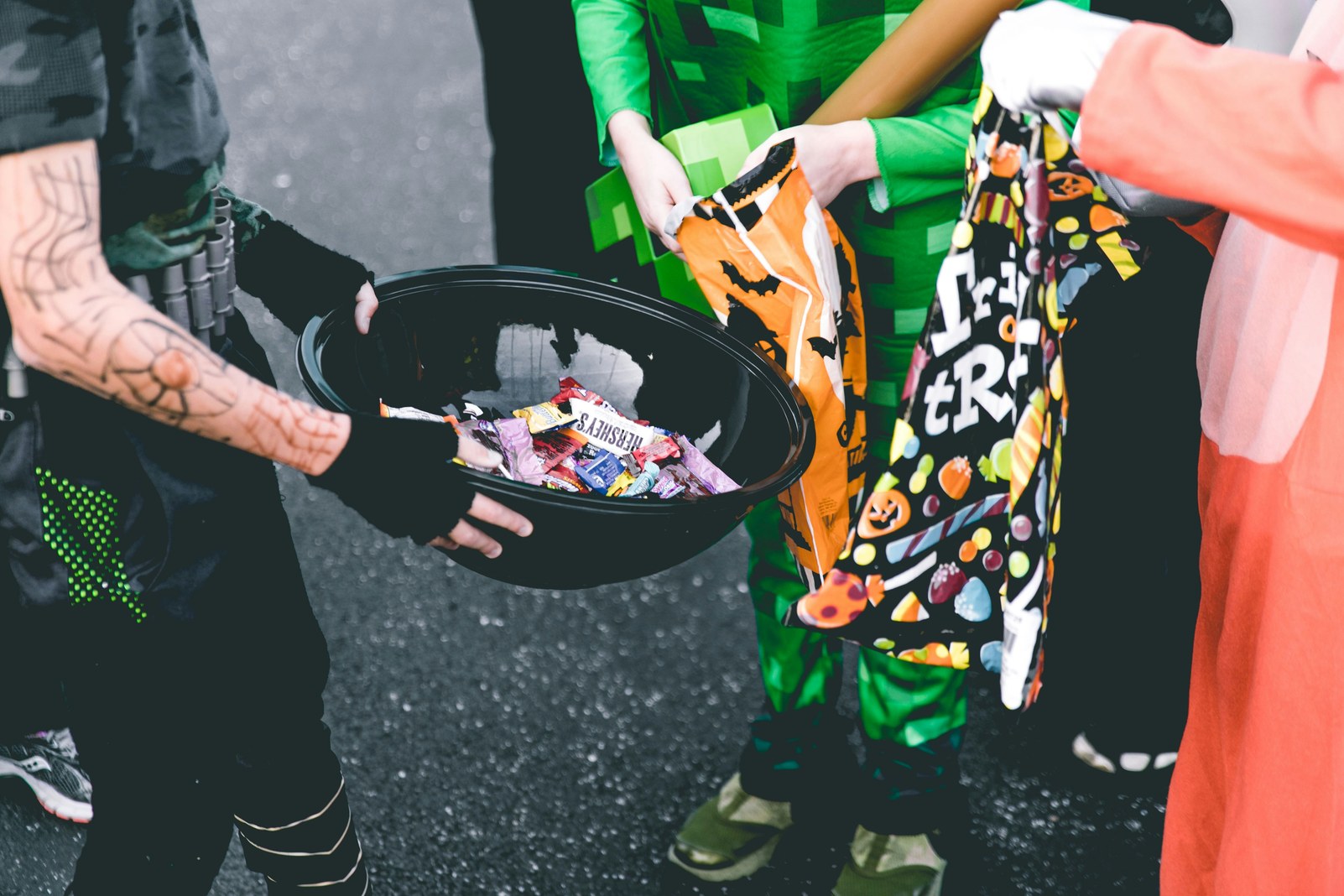
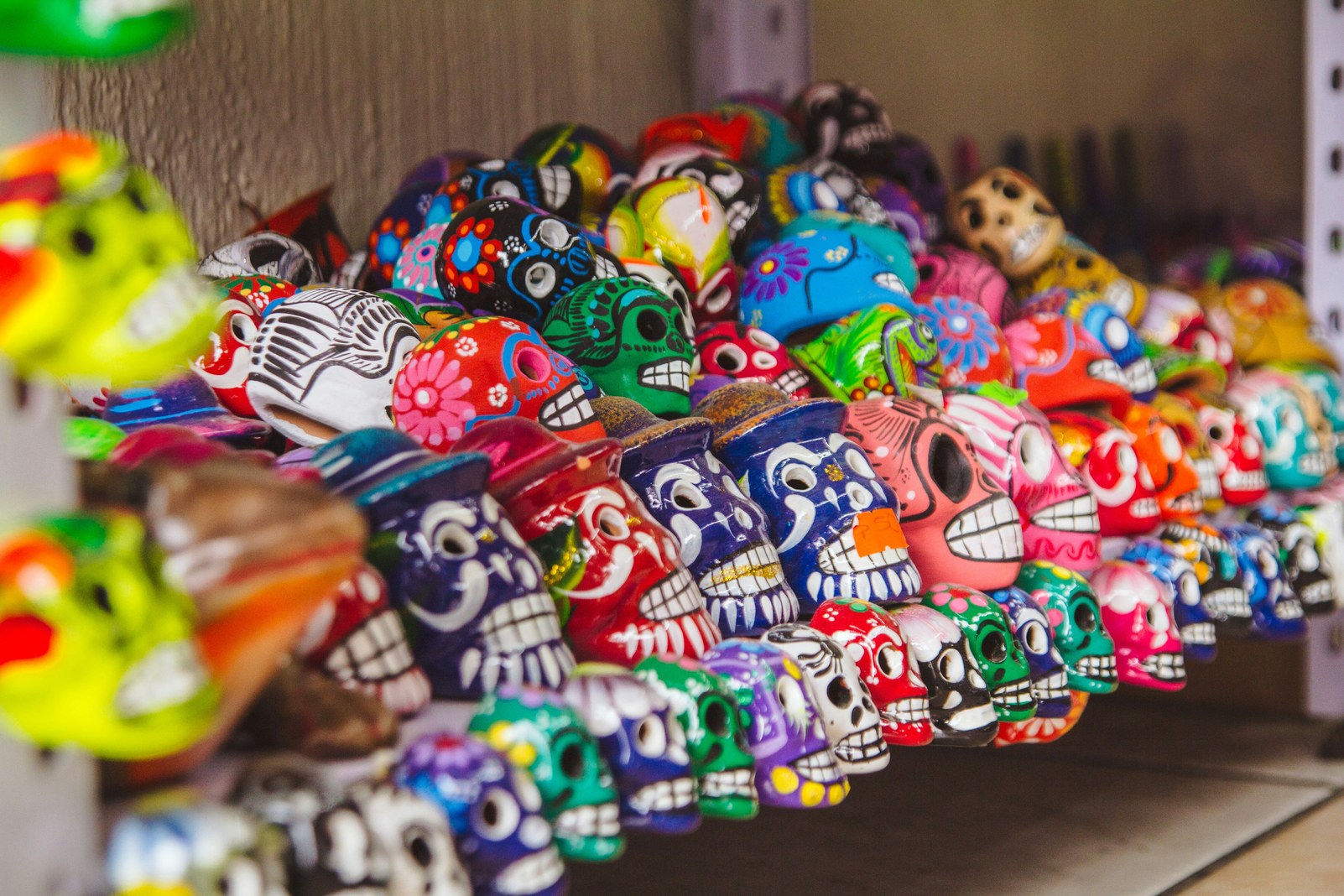
October brings together a remarkable range of communications concerning seasonal change, death, memory, religious observance, and communal imagination. Halloween, now widely recognized through costumes, candy, decorations, and public festivities, has a layered history rather than a single origin.
Halloween — History and Transformation
Its name derives from All Hallows’ Eve, the evening before the Western Christian feast of All Saint’s Day on November 1 (Santino, 1983). The observance belongs to Allhallowtide, a three-day period that includes All Saint’s Day and All Souls’ Day on November 2. Historians commonly connect Halloween’s development both to medieval Christian commemorations of saints and the dead and to older seasonal customs associated with Samhain, a Gaelic festival marking summer’s end and the beginning of the darker half of the year (Johnson). Samhain combined agricultural and pastoral ideas of work and seasonal ideas of time with supernatural ideas of life and death (Santino, 1983). It is best understood not as an unchanged survival of an ancient rite, but as a tradition that developed through the interaction of religious calendars, local folklore, migration, and popular culture.
In Ireland and Scotland, practices associated with Samhain included seasonal gatherings, divination, disguises, and protective rituals associated with a time of transition. Over centuries, these customs interacted with Christian observances and, through large-scale Irish and Scottish migration in the nineteenth century, were carried to North America. There, Halloween gradually shifted from a community and neighborhood celebration to a highly recognizable children’s holiday centered on masquerade, door-to-door visiting, and treats (History, 2019).
The modern tradition of trick-or-treating has several historical antecedents, including “souling,” in which people went from household to household in exchange for food or small cakes while offering prayers for the dead. This later evolved into guising, where children donned a costume and went door to door accepting gifts, but they would have to sing a song, recite a poem, or tell a joke before they could accept the gift.
By the twentieth century, mass-produced costumes, greeting cards, decorations, films, and confectionery turned Halloween into a major annual occasion for consumption as well as social play. Consumer-culture scholar Russell W. Belk characterizes this evolution as an American ritual in which the boundaries between childhood and adulthood, order and disorder, and ordinary and fantastical identities can be temporarily reimagined.
Día de Muertos — Remembrance and Cultural Identity
Día de Muertos, observed primarily in Mexico on November 1 and 2, should not be understood as a Mexican version of Halloween; although both occur during the same season and involve death, they differ greatly in meaning, history, and practice. Día de Muertos is a family- and community-centered commemoration shaped by Indigenous Mexican traditions of honoring deceased relatives and Catholic observances of All Saints’ Day and All Souls’ Day, and it has continually evolved through religious and cultural exchange (Andrist, 2021).
Families create ofrendas, or altars, with photographs, candles, cempasúchil (marigolds), food, beverages, and other offerings to welcome and remember loved ones who have died. Cemetery visits, storytelling, music, shared meals, skull imagery, and public gatherings portray death as part of enduring kinship, memory, and the cycle of life rather than simply as something to fear.
Día de Muertos also reflects the connection among religion, cultural tradition, and artistic expression in Hispanic understandings of death and dying (Andrist, 2021). However, it should not be treated as the only expression of Hispanic death practices, as this overlooks the diversity of traditions across the Hispanic world (Andrist, 2021). In Nepantla Familias, Stephanie Elizondo Griest uses Día de Muertos to reflect on Mexican American identity and the experience of living between Mexican and U.S. cultural worlds, showing that cultural belonging is both inherited and actively negotiated (Griest, 2021). UNESCO recognized Mexico’s Indigenous festivity dedicated to the dead on its Representative List of the Intangible Cultural Heritage of Humanity in 2008, affirming its cultural significance and community-based transmission.
Halloween Around the World
Today, Halloween-related celebrations circulate internationally through migration, tourism, retail, film, social media, and youth culture, but they take locally distinctive forms. In Japan, for example, Halloween has developed into a distinctive public costume culture, particularly among young adults in urban spaces such as Tokyo’s Shibuya district. Scholarly research on the subject examines street dressing-up as a contemporary cultural performance rather than a simple imitation of North American trick-or-treating. In other places, communities blend imported Halloween imagery with local autumn festivals, Christian observances, ancestral-remembrance practices, or commercial entertainment.
In Japan, Halloween has been absorbed into existing practices of cosplay, popular visual culture, and urban sociability. Researchers have described this as a form of social bricolage: participants combine imported Halloween imagery with anime, manga, gaming, horror aesthetics, and locally meaningful ideas of play and role reversal.
Remembering the Dead, Understanding Traditions
This global circulation raises an important cultural-literacy question: how can institutions welcome playful and creative participation while avoiding the flattening or appropriation of traditions with deep religious, Indigenous, and family significance? A thoughtful October program can use Halloween and Día de Muertos to encourage historical inquiry, intercultural respect, and reflection on how communities remember the dead, mark seasonal change, and create spaces for collective belonging.
Sources and further reading
Multimedia Resources
- Consejo Nacional para la Cultura y las Artes. (2002). Indigenous festivity devoted to the dead [Video]. UNESCO Multimedia Archives. https://www.unesco.org/archives/multimedia/document-3743
- Encyclopædia Britannica. (2025, November 1). The thousand-year history of Halloween [Video]. https://www.britannica.com/video/origins-of-Halloween-explained/-287163
- Takagi, Y., & Groot, M. (2017). Tokyo Halloween on the street: Japanese dressing up between bricolage and authenticity. Dress, 43(1), 1–21. https://doi.org/10.1080/03612112.2017.1290189
- UNESCO. (2008). Indigenous festivity dedicated to the dead (Mexico) . Intangible Cultural Heritage. https://ich.unesco.org/en/RL/indigenous-festivity-dedicated-to-the-dead-00054
Suggested Academic References
- Belk, R. W. (1990). Halloween: An evolving American consumption ritual. In M. E. Goldberg, G. Gorn, & R. W. Pollay (Eds.), Advances in consumer research (Vol. 17, pp. 508–517). Association for Consumer Research.
- Belk, R. W. (1994). Carnival, control, and corporate culture in contemporary Halloween celebrations. In J. Santino (Ed.), Halloween and other festivals of death and life (pp. 105–132). University of Tennessee Press.
- Santino, J. (Ed.). (1994). Halloween and other festivals of death and life. University of Tennessee Press.
Sources
- Andrist, D. D. (Ed.). (2021). Death & dying in Hispanic worlds: The nexus of religions, cultural traditions, and the arts . Liverpool University Press. https://doi.org/10.2307/j.ctv333ktd2
- Dance, A. (2018, October 26). How Halloween has traveled the globe. Sapiens. https://www.sapiens.org/culture/halloween-history-global/
- Frasier, W. (2016, October 25). Sugar skulls and hipsters: Student research looks at cultural appropriation . California State University San Marcos News. https://news.csusm.edu/sugar-skulls-and-hipsters-student-research-looks-at-cultural-appropriation/
- Fullerton College. (2012). Focus: Día de los Muertos [LibGuide]. Fullerton College Library.
- Griest, S. E. (2021). Día de Muertos . In S. Troncoso (Ed.), Nepantla familias: An anthology of Mexican American literature on families in between worlds (pp. 79–90). Texas A&M University Press.
- History.com Editors. (2019, October 3). How trick-or-treating became a Halloween tradition. History. https://www.history.com/articles/halloween-trick-or-treating-origins
- Johnson, B. (n.d.). Halloween . Historic UK. https://www.historic-uk.com/CultureUK/Halloween/
- Lavery, J. (2022, November 1). Strictly not Halloween: Why Day of the Dead is misunderstood—and why that matters. The Conversation. https://theconversation.com/strictly-not-halloween-why-day-of-the-dead-is-misunderstood-and-why-that-matters-192476
- Santino, J. (1983). Halloween in America: Contemporary customs and performances. Western Folklore, 42(1), 1–20. https://doi.org/10.2307/1499461
- UNESCO. (2008). Indigenous festivity dedicated to the dead (Mexico). Intangible Cultural Heritage. https://ich.unesco.org/en/RL/indigenous-festivity-dedicated-to-the-dead-00054