Anthropology
Anthropology,
the study of humanity, is composed of four broad subfields that
cover practically every dimension of the human experience. The main four subfields of anthropology include:
physical anthropology, the study of humans as biological
organisms; cultural or sociocultural anthropology which focuses on
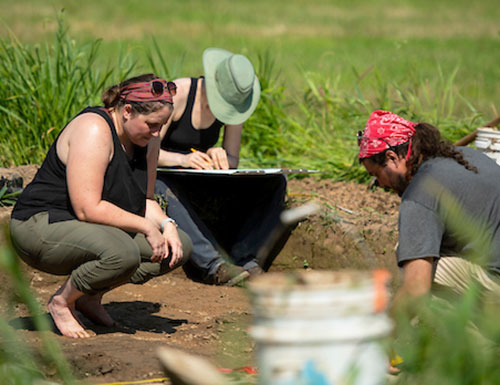
living human groups; archaeology, the study of cultural evolution
through the examination of material remains of past societies, and
anthropological linguistics, the study of the history, structure,
and function of human languages.
Anthropologists
are responsible for popularizing the concept of culture.
As a discipline, anthropology also emphasizes a holistic
understanding of the connectivity between gender, religion, ethnicity,
nationality, and economics. The importance of understanding and appreciating cultural and
physical diversity becomes ever more imperative, as globalization
continues.
Minor in Anthropology
A minor in anthropology complements a wide variety
of professional careers in rural and urban communities in the U.S.
and abroad. Anthropology helps to prepare students for careers in
international development, forensic anthropology, cultural resource
management, archaeology, human ecology, environmental sciences,
national and international corporate management, health and human
rights advocacy, public service, and academia. Anthropology faculty
at WIU have extensive field research experience and are cutting-edge
scholars who specialize in human relationships with the environment.
Interested students are encouraged to visit with one of our anthropologists—Drs.
Patricia Anderson, David Casagrande, or Heather McIlvaine-Newsad—to
learn more about the anthropology minor. Please call (309) 298-1056
or e-mail us.
Please see the current Undergraduate
Catalog for details, or check STARS
for information about available courses.
Undergraduate Advisor
Sharon B. Keeling
Morgan Hall 430
(309) 298-1486
SB-Keeling@wiu.edu
|