
University News
![[Download Print-Quality Image]](http://www.wiu.edu/images/news/18321/18321_11088_1.jpg)
WIU LEJA Professor, Student Pen Security Magazine Article: "Parliaments Under Attack Worldwide — Extremism, Riots, Vaccine Mandates"
February 23, 2022


From Feb. 9 Security Magazine
MACOMB, IL – Last year, Western Illinois University Law Enforcement and Justice Administration (LEJA) Professor Dean Alexander, who also leads WIU's Homeland Security Research Program, published numerous articles focusing on such topics as extremism in the United States, the January 6, 2021 U.S. Capitol siege, fringe anti-vaxxers and violence associated with anti-masking efforts. Now, Alexander and LEJA student Caden Buettner, a senior from LaSalle (IL), have joined forces again to meld these topics and others within a global context and project their ramifications worldwide.
The pair, who have co-authored another article for Security magazine, recently researched issues relative to parliaments under attack worldwide by fringe groups. Their work was published on Feb. 9 (LINK ABOVE) in Security magazine. This is the 11th piece published by Alexander and one of his current and/or former LEJA students, which gives students an excellent opportunity to showcase their knowledge learned in the classroom, Alexander added.
"In our most recent research, we've found that individuals and groups ascribing to variant (and sometimes overlapping) extremist and fringe precepts threatened or attacked parliaments globally. The principal impetus for such violence was due to respective government-initiated COVID-19 health and safety measures or the lack thereof," Alexander explained. "Violent subversives among anti-pandemic advocates, militants, conspiracy-laden individuals, hate group members and other belligerents were found to have imperiled legislatures globally. This reality evidences that these incidents were not random or furtive acts, but rather, purposeful, brazen, planned, symbolic and meriting attention. More specifically, legislatures should adopt a heightened security posture. After all, legislatures are bound to be targeted again here and abroad."
According to Buettner, for more than 200 years, parliaments worldwide have been subjected to arson, gunfire, bombings and other aggression perpetrated by foreign armies, domestic terrorists and mobs.
"Perpetrators targeting this branch of government have proceeded along this pathway: they meet, define themselves and share their animus against the legislature and its policies. Then, they agree to take action, sometimes through non-violent protests, and other times through pre-planned violent attacks," Buettner added.
The pair wrote that, in 2020-2021, in the U.S. alone, thousands of protesters opposing pandemic response measures, gun control rule and opposition to the presidential election, to name a few, descended upon select state capitols. While some may have been present to peacefully protest, some of the dissidents were armed, made threats, sought to intimidate legislators and entered legislatures. As recently as February 2022, hundreds of anti-mask and anti-vaccine protesters gathered outside Oregon's legislature in Salem.
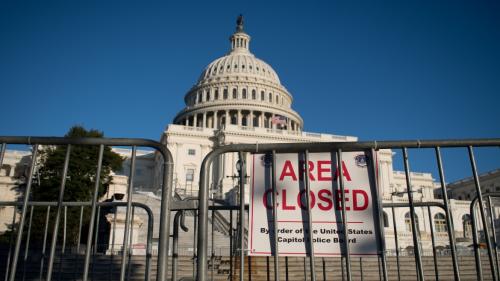
"These and other aggressive protests at state legislatures nationwide were precursors and offshoots to the (obviously) seismic revolt on January 6," Alexander explained. "The riot at the U.S. Capitol on January 6 commenced with some 10,000 protesters on the Capitol grounds. The descent into chaos that day culminated with 2,000 agitators breaching the Capitol complex, and was intended to subvert democracy. The transcending effects of that crisis include a loss of faith in our democratic institutions and processes, as well as further fracturing an already highly partisan, tribal and discordant society. More than $1.5 million in damages were reported and 725 individuals were charged with federal crimes in that incident alone."
Parliaments Under Attack Globally
A review of several dozen violent pandemic-connected protests at parliaments worldwide in 2020-2021 led to a recognition of their scope and relevance. Upheavals took place from Australia and New Zealand to Indonesia, Thailand, England, Germany and Slovenia, and from Morocco and Tunisia to Canada, Guatemala, Paraguay and Curacao, among others. The incidents spanned gatherings of dozens of persons to tens of thousands, during which vandalism, arson and more acts and instruments of violence were used to attempt to enter parliamentary grounds. The sheer volume of protesters and their blockade of roads leading to those institutions impinged access to those sites. At times, security forces were caught off guard — intelligence failures, understaffing or otherwise — as protesters breached gates, climbed over fences and barriers and stormed legislatures.
"Among the participants in combative manifestations were those opposed to masks and COVID-19 vaccine mandates, lockdown measures and health/COVID-19 passes; a mix of extremist, hate-based, ultra-nationalists; and those with anti-government interests, and those aligned with distinct political parties," Alexander and Buettner noted in the Security story. "Individuals embracing fringe ideologies (e.g., QAnon and sovereign citizens), COVID-19-related conspiracies (e.g., anti-Semitic, 5G cell towers and vaccine efficacy) and articulating other grievances were present at particular irruptions. These crowds were often fueled by disinformation, leveraged and accelerated by technology and social media, and buttressed by alienation, mental health and social pressures spurred by the pandemic. In addition, 'average citizens,' embracing all walks of life, participated in these disturbances."
Democracies at Risk
Alexander added that while the airing legitimate grievances and peaceful protests are the mainstay of a healthy democracy and should be encouraged, violence or the threat thereof, especially enunciated by those outside a legislature while trying to storm it, or upon its breach, should be deemed unacceptable and — given its illegality — be avoided by all.
"This is especially so for those allegedly clamoring for freedom. Democracy cannot be nurtured when a legislature, or any branch of government, is on the receiving end of the proverbial barrel of a gun," he shared. "What is even more disappointing, and frightening, is that a November 2021 Public Religion Research Institute poll found selected Americans increasingly support political violence, lack faith in governmental institutions, embrace anti-democratic ideals and are more susceptible to misinformation and disinformation than in previous years."
Buettner and Alexander noted that collectively, these polls disturbingly point to a markedly alienated society, having doubts in many American institutions and processes and easily swayed by whatever rumor or story, however preposterous, is offered by politicians, groups or other agenda-infused individuals.
"The February 2022 Canadian truckers' 'Freedom Convoy' in the vicinity of Ottawa's parliament protesting Canada's anti-pandemic measures has spawned truck convoys of a similar vein across the world. This development underscores the urgency to recalibrate security measures around legislatures worldwide," the authors noted. "These realities, coupled with the aforementioned record of avid intrigue and inclination to attack legislatures globally, reflects poorly for democracies and their citizenry. Individuals who envision such a society and take illegal steps to advance it should be investigated, prosecuted and adjudicated promptly. In doing so, people can continue to live peacefully in a democratic society and contribute to its sustenance, despite its imperfections as with its citizenry."
Read the complete story at securitymagazine.com/articles/97055-parliaments-under-attack-worldwide-extremism-riots-vaccine-mandates-and-violence
About the Authors
Alexander can be reached at DC-Alexander@wiu.edu. He has been a member of the WIU School of LEJA since 2005. His former students work at police departments, government agencies (FBI, Department of Homeland Security and State Department) and risk management firms across the United States. His teaching, research and speaking activities encompass terrorism, security and legal issues, and he has lectured in 10 countries, including to law enforcement and military officials at North Atlantic Treaty Organization (NATO), U.S. State Department and National Intelligence University events. Since publishing on terrorism in 1991, Alexander has written several books on the subject, including: Family Terror Networks (2019), The Islamic State: Combating the Caliphate Without Borders (Lexington, 2015), Business Confronts Terrorism: Risks and Responses (University of Wisconsin Press, 2004), and Terrorism and Business: The Impact of September 11, 2001 (Transnational, 2002).
Buettner is a senior law enforcement and justice administration major, with minors in security administration, criminalistics and homeland security. At WIU, he is the Attorney General for WIU's Student Government Association (SGA) and is the founder/president of several charitable clubs on campus. Buettner is also learning Arabic to become fluent in reading and writing in this language. Following graduation, he plans to work for federal law enforcement.
Posted By: University Communications (U-Communications@wiu.edu)
Office of University Communications & Marketing
Connect with us: